Will Congress enact a ban on congressional stock trading before January 3, 2027?YES 34% 3%Will cannabis be federally legalized or descheduled before January 1, 2029?YES 58% 2%Will there be a federal government shutdown before October 1, 2026?YES 41% 5%Will Republicans keep control of the U.S. House in the 2026 midterms?YES 52% 1%Will the Senate confirm a Supreme Court nominee in 2026?YES 71% 2%Will a federal minimum wage increase be enacted before January 1, 2028?YES 22% 1%Will Congress enact a comprehensive federal AI framework law before January 1, 2028?YES 47% 4%Will a comprehensive border security bill become law before January 2027?YES 62% 1%Will Democrats win control of the U.S. Senate in the 2026 midterms?YES 44% 2%Will the Republican candidate win Ohio's 2026 U.S. Senate race?YES 58% 3%Will the Federal Reserve cut its policy rate at the July 2026 FOMC meeting?YES 68% 9%Will the NBER declare a U.S. recession beginning in 2026?YES 24% 3%Will Medicare drug-price negotiation be expanded to 30+ drugs before 2028?YES 36% 2%Will pandemic-era Medicare telehealth flexibilities be made permanent before 2027?YES 74% 1%Will Congress enact a ban on congressional stock trading before January 3, 2027?YES 34% 3%Will cannabis be federally legalized or descheduled before January 1, 2029?YES 58% 2%Will there be a federal government shutdown before October 1, 2026?YES 41% 5%Will Republicans keep control of the U.S. House in the 2026 midterms?YES 52% 1%Will the Senate confirm a Supreme Court nominee in 2026?YES 71% 2%Will a federal minimum wage increase be enacted before January 1, 2028?YES 22% 1%Will Congress enact a comprehensive federal AI framework law before January 1, 2028?YES 47% 4%Will a comprehensive border security bill become law before January 2027?YES 62% 1%Will Democrats win control of the U.S. Senate in the 2026 midterms?YES 44% 2%Will the Republican candidate win Ohio's 2026 U.S. Senate race?YES 58% 3%Will the Federal Reserve cut its policy rate at the July 2026 FOMC meeting?YES 68% 9%Will the NBER declare a U.S. recession beginning in 2026?YES 24% 3%Will Medicare drug-price negotiation be expanded to 30+ drugs before 2028?YES 36% 2%Will pandemic-era Medicare telehealth flexibilities be made permanent before 2027?YES 74% 1%
Legislation Tracker
H.R. 2093EnactedInfrastructureTechnologyRural Development

Fund high-speed internet buildout in underserved rural areas

Rural Broadband Expansion and Accountability Act

Introduced
Committee
Passed House
Passed Senate
Law

Plain-language summary

AI

This law funds fiber and fixed-wireless construction in rural areas that still lack modern broadband, with a key accountability twist: providers get the final 30% of each grant only after independent speed tests confirm delivered service. A public dashboard tracks every funded project. It was signed into law on January 30, 2026.

AI-generated explanation. Review the official text and official sources before drawing conclusions — summaries can omit important detail.

The strongest case on each side

Strongest argument for

Previous broadband programs paid providers up front and repeatedly funded maps, not service; conditioning the final tranche on verified speeds is the accountability mechanism earlier rounds lacked. Reliable connectivity is now a precondition for rural healthcare, education, and small-business survival.

Strongest argument against

This is the fourth major federal broadband appropriation in six years, layered on top of programs that have not finished spending, raising real duplication risk. Speed-verification requirements add compliance costs that favor large carriers over the small rural cooperatives the bill claims to help.

Both cases are presented in their strongest form. Quorly does not take a side.

What it changes — and what it doesn't

What it changes
  • $9.2B for last-mile broadband in census blocks below 100/20 Mbps
  • Final 30% of each grant paid only after independent speed verification
  • Public dashboard tracking every funded project
What it does NOT change
  • Does NOT regulate broadband prices or impose net-neutrality rules
  • Does NOT fund areas that already have qualifying service

Recorded votes

House Vote Passed
423 votes cast
391
32
YEANAY
Democrats
156 yea · 19 nay
Republicans
235 yea · 13 nay

Party breakdown is an estimated demonstration visual.

Senate Vote Passed
98 votes cast
84
14
YEANAY
Democrats
29 yea · 9 nay
Republicans
55 yea · 5 nay

Party breakdown is an estimated demonstration visual.

Timeline

  1. Mar 4, 2025
    Introduced in the House by Rep. Dale Hutchins (R)
  2. Jul 22, 2025
    Passed the House, 391–32
  3. Dec 16, 2025
    Passed the Senate with amendments, 84–14
  4. Jan 13, 2026
    House agreed to Senate amendments, 388–29
  5. Jan 30, 2026
    Signed into law (P.L. 119-41)

Discussion

3 comments
L
Liberty1776Top Forecaster3h

The committee calendar is the tell here. Watch whether a markup actually gets scheduled before the August recess — floor speeches are noise, markup dates are signal.

D
DataDrivenAnalyst6h

Cosponsor count has been the best single predictor in my model this cycle. Cross the ~200 mark in the House and passage odds roughly double, controlling for committee.

P
PolicyOracle1d

Worth reading the strongest-against section before taking a position — the implementation questions are where most bills like this actually stall, not the politics.

Sponsor
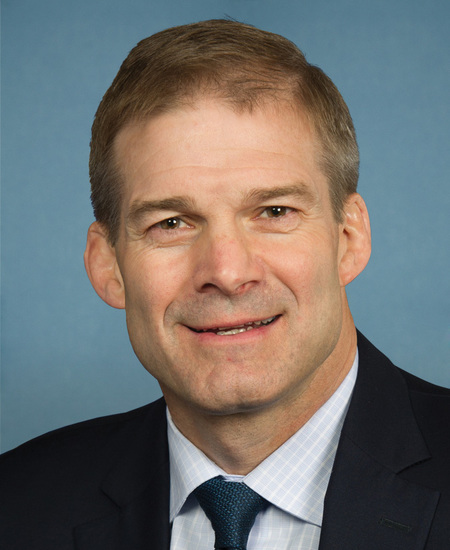
Official portrait of Rep. Jim Jordan
Rep. Jim Jordan
RRepublican
204cosponsors
House Energy & Commerce
Senate Commerce, Science, & Transportation

Community sentiment

Live
78%
of respondents support this bill
Support
78%
Oppose
14%
Not sure
8%

Public Pulse demonstration sample · not a scientific poll

Related forecast markets

No linked forecast markets for this bill yet.

Forecasts use virtual Q Credits with no cash value. Market probabilities reflect participant expectations and can be incorrect.
Demonstration data — not a live government record